
Problem
The client’s observation was straightforward: at admission time, a student’s information is scattered. Where is the college, which course, what is the fee, how are the placements, how many are government and which are private, what is the fee at which university, where is the best faculty for computer science. On top of that, which college can I get at my rank?
The vision was to give all of this in one place:
College, course, city and state-wise filters
A live examination calendar, so a student doesn’t have to open 10 sites for exam dates
Rank/college predictors: NEET, GATE, JEE
A daily-updated blog and news section, with internal linking to colleges
An ecommerce-like catalogue with lakhs of listing/filter combinations
In other words, the client didn’t want a blog, but a data product that also had to be discoverable on Google.
What was the problem?
Building from scratch meant the architecture was in our hands. But that is also what made it risky.
Problem 1: URL explosion.
Where there are filters for college × course × city × state × exam, URLs run into the lakhs. Like in ecommerce, every filter combination is a new URL. Getting lakhs of pages indexed on Google is neither possible nor necessary. If everything were allowed to be crawled, crawl budget would be spent on useless combinations and duplicates, and the pages that do the real work would be left behind.
Problem 2: Which pages are worth indexing?
A student doesn’t search for every filter page. “Colleges in Delhi” has demand. “Colleges in Delhi, 2nd sort, fee ascending, page 4” does not. We had to draw the line between which page is a “master” and which is only a utility.
Problem 3: Prioritizing daily-changing content.
Exam dates, counselling updates and results change daily. Crawl budget should go more to these pages than to old static listing pages.
Problem 4: Choosing blog topics.
The blog had to run on “what students actually search for,” not “what we want to write.” Otherwise there would be plenty of content but no traffic.
Problem 5: Predictors are a tool, not a page.
A rank predictor’s output is interactive. What would Google get to read? This needed separate work.
Choosing a college in India means opening ten tabs. A student comparing MBBS options has to check fees on one site, cutoffs on another, counselling dates on a third, and then guess which information is current. Parents face the same maze, usually with less time and less clarity.
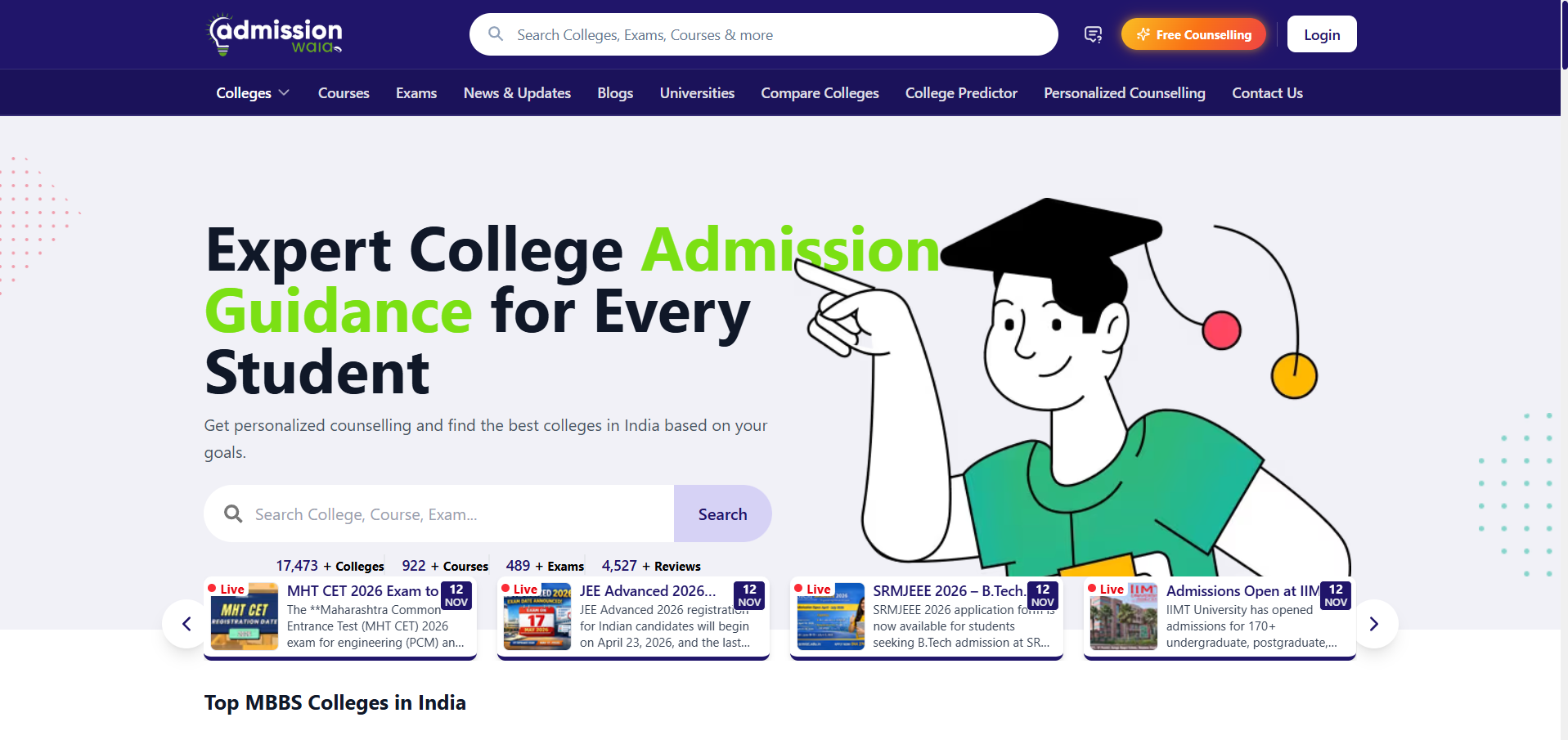
AdmissionWala, a Patna-based admission guidance brand, wanted to fix this with a single education portal. The brief was ambitious:
Scale: list 17,000+ colleges, 900+ courses and 480+ entrance exams with accurate, structured data.
Usefulness: give students tools, not just articles: college comparison, rank and college predictors, and exam updates.
Conversion: turn research traffic into counselling leads.
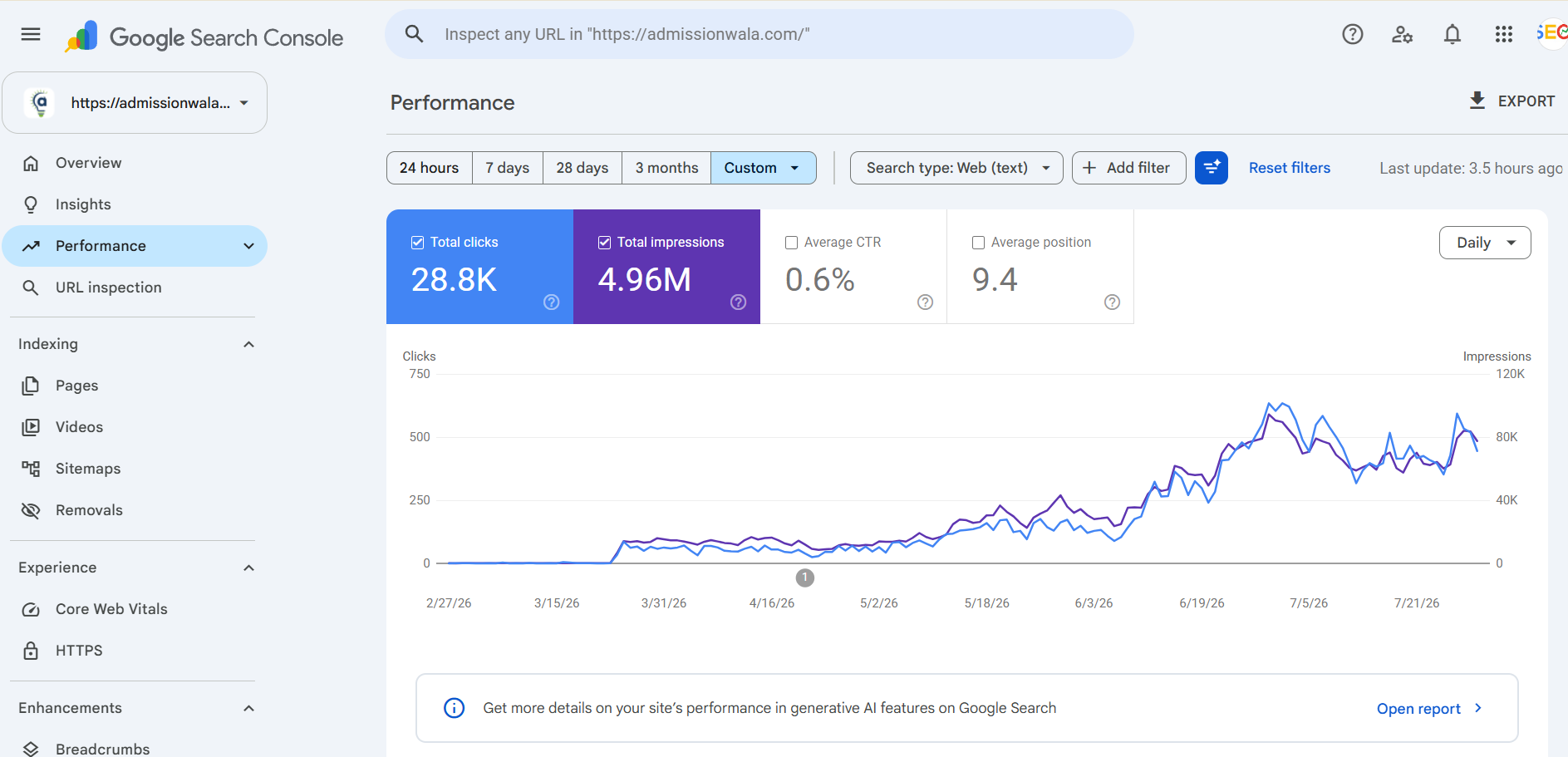
Visibility: compete for admission-related searches against well-established education portals, starting from a brand-new domain with no authority.
A site this large could easily become slow, hard to crawl and full of thin pages. The challenge was to build it so that users and Google could both navigate it.